.jpg)

The last time a product manager asked for “just a small feature” and the team responded with a deep sigh, it probably wasn’t about the feature at all. It was about the architecture. Legacy systems quietly tax every roadmap, slowing delivery, increasing outages, and making hiring harder. At some point, every technology leader faces the same question: modernize or keep patching?
Why a Big Rewrite Is Usually the Wrong Answer
The fantasy is familiar: freeze new features, assemble a crack team, rebuild everything in a shiny new stack, and relaunch a modern platform in one triumphant moment. In practice, big rewrites tend to overrun, under-deliver, and burn out teams. While the rewrite drags on, the existing system still needs fixes, customers still demand change, and the business keeps shifting under everyone’s feet.
Large rewrites fail because they disconnect architecture work from real user value. Months pass before anything ships. Assumptions about requirements age quickly. The team spends enormous energy just catching up to parity instead of moving the product forward. By the time the “new” system is ready, it can already feel outdated.
What Is Rearchitecting? (And How It Differs from Refactoring)
Rearchitecting is often confused with refactoring, but the difference lies in scale and intent. Refactoring improves the internal structure of code—cleaning up functions, naming variables better, or removing duplication—without changing how components interact. It is like repainting the walls or organizing a closet; the house remains the same.
Rearchitecting is the fundamental restructuring of a system’s components, boundaries, and data flows. Unlike a rewrite, it preserves the existing business logic and data, but it alters the underlying mechanisms that deliver them. It is the middle path between a superficial cleanup and a total teardown.
When Rearchitecting Beats Rewriting
Not every system deserves to be rearchitected. Some are so brittle, obscure, or poorly understood that a contained rewrite of a specific slice is the safer choice. Yet for many core platforms, the better strategy is to treat the existing system as an asset to be gradually reshaped, not a liability to be discarded. That approach shines in a few scenarios: long-lived products, complex domain logic that already encodes years of hard-won knowledge, and systems that cannot tolerate extended downtime.
Industry guidance emphasizes this incremental path. A major consulting study on modernization recommends a phased and coexistent approach, explicitly noting that phased modernization is less risky than attempting everything at once as a “big-bang” initiative Infosys phased modernization insight. Compatibility layers, coexisting old and new components, and staged cutovers reduce the chance that a single architectural decision takes down the business.
Rearchitecting is especially attractive when the system still delivers clear business value but blocks future plans. If releasing features feels slow, outages cluster around a few shared components, or every change requires touching an intimidating monolith, that is a sign the architecture-not the product vision-is the constraint. In those cases, a targeted, incremental reshaping of the architecture lets teams keep serving customers while opening paths to new capabilities.
Signals That Incremental Modernization Is the Right Path
Certain patterns show up repeatedly in organizations that benefit most from a rearchitecting approach rather than a full rewrite. The system is business-critical and downtime is intolerable. The codebase has pockets of clarity, often in areas maintained by stable teams, alongside “dark corners” no one wants to touch. New feature ideas usually require navigating several unrelated modules, not because of business complexity but because layers are tightly coupled.
Another strong signal is organizational knowledge. If many engineers and domain experts understand the current system, that expertise can be leveraged. Throwing it away through a rewrite means re-learning every nuance of pricing, compliance, and edge cases. Rearchitecting respects that accumulated understanding, extracting and restructuring it instead of trying to reinvent it from scratch.
Core Principles of Rearchitecting Without a Big-Bang Rewrite
Incremental rearchitecting isn’t just “working on the old system more carefully.” It follows a set of principles that keep change safe and aligned with business goals. The first principle is modularization: identifying seams in the system and turning them into real boundaries. That might mean introducing clear service interfaces, anti-corruption layers, or modules within a monolith that can later be extracted.
Modularization is not just architectural theory. A 2024 study highlighted that projects using modular frameworks saw a 40% decrease in development time, linking structural decisions directly to delivery speed modular frameworks development time statistic. Each boundary that isolates a function-billing, search, identity-reduces the blast radius of changes and makes it easier to evolve that slice independently.
Other key principles include strict backward compatibility for external consumers during transitions, automated regression testing, and dual-running strategies where old and new implementations operate side by side for a time. This reduces the chance that business-critical behavior changes unexpectedly, even as internal implementations shift.
A Practical Rearchitecting Playbook
Turning rearchitecting from a slogan into an executable plan requires a concrete playbook. The goal is to link architectural work with visible improvements in reliability, delivery speed, or customer value. That starts with a shared understanding of where the system hurts the most and which outcomes matter most to the business.
.jpg)
Think of the playbook as a series of short campaigns rather than a single war. Each campaign has a clear target-for example, isolating billing, modernizing the authentication flow, or replacing a fragile reporting pipeline. Success is measured not just by code changes but by improved metrics: fewer incidents in that domain, faster lead time for related changes, or a measurable performance gain.
Teams that succeed with rearchitecting also treat their architecture roadmap as living, not static. Lessons from each campaign feed into the next. If a chosen pattern proves hard to operate, the next slice can use a different approach. This feedback loop turns modernization into an ongoing capability rather than a one-off project.
Step 1: Map the System and the Pain
Begin with an architecture and dependency map that goes beyond boxes and arrows. Identify hot spots: modules that trigger the most incidents, areas with the highest change frequency paired with high defect rates, and components that gate every release. User journeys highlight where architectural friction shows up as customer pain, such as slow checkout or flakey onboarding flows.
Alongside the technical map, gather perspectives from product, operations, and support. A legacy batch job might be technically ugly but operationally stable, while a “modern” component may be the real source of outages. The modernization map should reflect where change will deliver the most value, not just where engineers are most annoyed.
Step 2: Choose Strangler-Friendly Boundaries
With pain points identified, select a boundary where the “strangler fig” pattern can be applied: route traffic for a specific capability through a new implementation while the rest of the system stays intact. Good candidates have clear inputs and outputs, limited cross-cutting concerns, and high business impact. A single critical API, for instance, can be fronted with a gateway that gradually shifts traffic to a new backend.
These early boundaries are where patterns are tested: how to route, how to sync data, how to roll back safely. By starting with a few carefully chosen seams, teams learn which approaches fit their infrastructure and skill sets, then standardize on those patterns for future slices.
Step 3: Pair Refactoring with Feature Delivery
One of the most powerful ways to de-risk rearchitecting is to couple it with feature work already on the roadmap. When a product initiative touches a legacy area, expand the scope slightly to include structural improvements that will pay off in future changes. This framing makes it easier to secure buy-in and avoids “architecture for architecture’s sake.”
To keep risk in check, break each effort into small increments that can be merged and deployed frequently. This rhythm keeps the feedback loop tight: if a change increases latency or breaks an edge case, the problem is easier to trace and fix when only a small slice was modified.
Using AI and Automation as Force Multipliers
Modernization used to mean manual code spelunking and hand-written refactors at massive scale. AI-based tooling is changing that equation. Research on AI-driven legacy modernization from COBOL to Java reports transformation accuracy as high as 93%, surpassing both manual approaches at 75% and rule-based tools at 82%, indicating how machine learning can shoulder some of the heavy lifting in large migrations AI-driven legacy modernization study. While AI is not a silver bullet, it can accelerate repetitive tasks and provide structured suggestions that engineers validate and refine.
Testing is another area where AI is starting to shift the economics of change. A 2024 review of thousands of practitioner sources identified around 100 AI-based test automation tools, with platforms like Applitools, Testim, Functionize, AccelQ, and Mabl appearing frequently in real-world adoption, underscoring the growing role of AI in quality assurance AI-based test automation tools review. For rearchitecting efforts, such tools can help generate and maintain regression suites, detect visual or behavioral changes, and monitor critical user flows as components are swapped out.
The practical takeaway is to treat AI and automation as accelerators around the edges of rearchitecting: assisting with code translation, suggesting refactorings, generating tests, and analyzing logs. Human engineers still decide which patterns to apply, how to slice the system, and when a behavioral change is acceptable. AI expands capacity; it does not replace architectural judgment.
Managing Risk, People, and Governance
Technical patterns only succeed when organizational dynamics support them. Rearchitecting introduces change across teams, roadmaps, and operations. That change must feel safe and purposeful, not chaotic. Clear governance helps: defined criteria for selecting modernization targets, decision rights for architecture choices, and guardrails for experimentation.
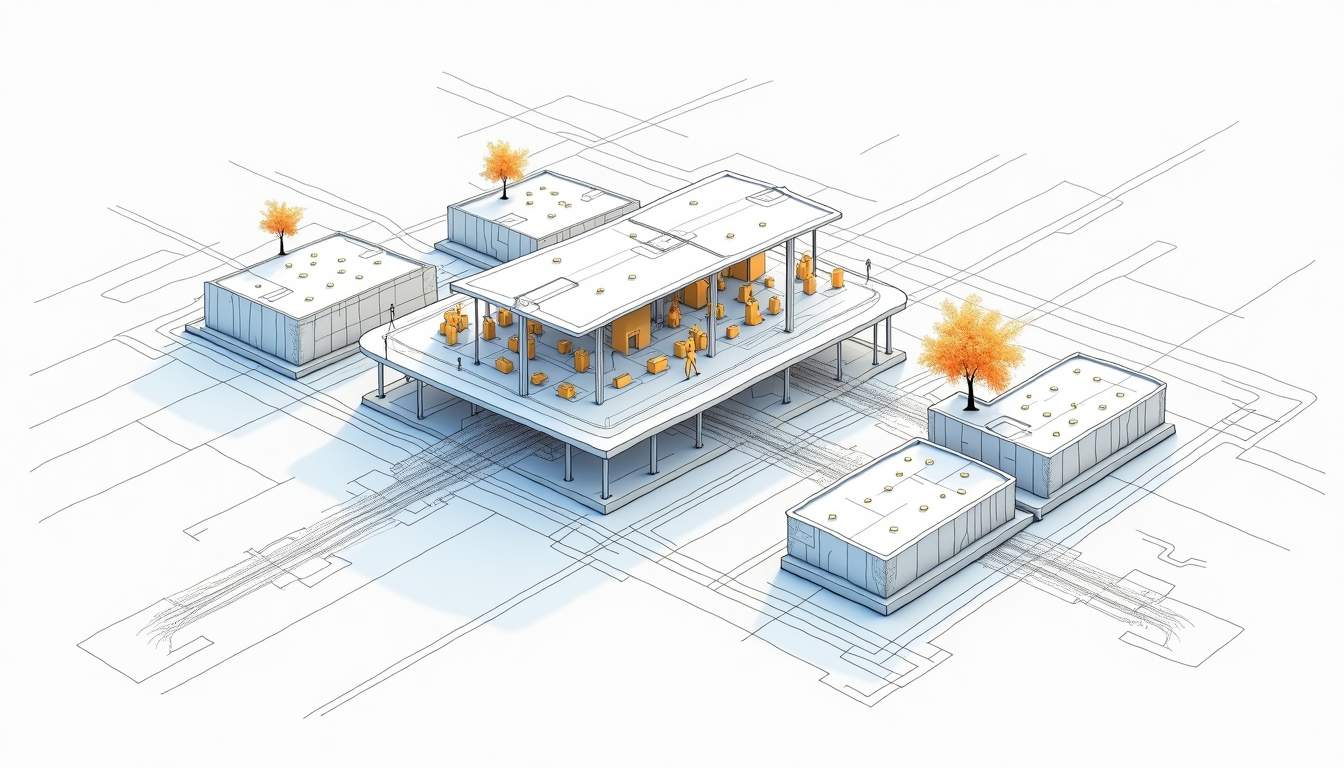
Communication is equally critical. Product managers need to understand why certain features will take longer up front but enable faster delivery later. Operations teams must be involved early when new services, data stores, or runtime platforms are introduced. Developers in different parts of the system should know where the new boundaries are and how to interact with them.
In successful organizations, modernization becomes part of career growth rather than a sideline chore. Engineers gain recognition for untangling high-risk areas, for designing robust APIs, and for improving operability. That cultural shift turns rearchitecting from a burden into a shared achievement.
Common Pitfalls (and What to Do Instead)
Even with a solid playbook, incremental modernization can go wrong in predictable ways. One common mistake is scattering small refactors everywhere without a guiding vision. The system gets churned but not structurally improved. A better approach is to concentrate effort on a few capabilities at a time until there is a clear, measurable win, then move on.
Another pitfall is treating “legacy” as an insult rather than a description. Teams rush to replace older components simply because of age, not because of risk or business value. That mindset can lead to neglect of genuinely fragile areas in favor of more fashionable rewrites. A disciplined modernization plan weighs customer impact, incident data, and strategic alignment when deciding what to tackle next.
A third trap is underinvesting in observability and automation. Without strong monitoring, logging, and automated testing, it is hard to know whether each architectural slice actually made things better. Before slicing up a system, it pays to ensure that deployments are reliable, rollback is quick, and key business metrics are visible. Then each rearchitecting step can be evaluated on evidence, not intuition alone.
Bringing It All Together
As organizations increase investment in modernization, the pressure to choose the right approach will only intensify. Industry surveys report that about 80% of respondents plan to invest in IT modernization, with 85% expecting to increase those investments specifically to support AI, highlighting how modernization and AI strategies are becoming tightly linked Nutanix modernization investment insight. Leaders who bet everything on a single big rewrite risk tying that investment to a fragile, all-or-nothing plan.
Rearchitecting offers a different path: a series of deliberate, incremental moves that respect the value locked in existing systems while clearing space for new capabilities. By choosing the right moments to modernize, focusing on modularization and safe patterns, and using automation and AI as force multipliers, teams can shape the architecture around the business rather than stopping the business for architecture. The result is not just a “modern stack,” but a system-and an organization-built to keep evolving.
Breaking the Deadlock: How to Start
The Text:Choosing to rearchitect instead of rewrite is the right strategic move, but the first step is often the hardest. Internal teams are frequently too buried in daily feature work to tackle that initial, critical refactor. This is the specific gap addressed by Control.
Instead of locking you into a multi-year roadmap, Control deploys a specialized, AI-native team to execute a single, high-value rearchitecting project. Whether it’s extracting a billing module from a monolith or modernizing a critical API layer, we fix one structural knot at a fixed price. This proves the value of the incremental approach in your real environment, giving you the momentum to scale the rest of your modernization strategy with confidence.