

The last legacy meeting wrapped up with a dense slide deck, a vague roadmap, and a familiar sinking feeling: the mainframe is still creaking in the background, the ERP is still fragile, and the release calendar is still hostage to “that one system nobody wants to touch.” Meanwhile, enterprises are already reporting around $370 million in losses every year because of outdated technology alone according to research on legacy system costs. The gap between slideware and working software is where most modernization efforts quietly stall.
That gap is not caused by a lack of strategy. Most organizations have no shortage of visions, frameworks, and operating models. What they lack is a practical path from “this is where we want to be” to “this line of COBOL, this service, this integration, will change on this date.” Fixing legacy code is less about big ideas and more about thousands of sharp, disciplined decisions. A 50-page deck usually postpones those decisions instead of enabling them.
The Real Cost of “Doing Nothing” with Legacy Code
Legacy systems are often framed as a necessary evil: too risky to touch, too important to fail. Yet standing still is not neutral. It is expensive. Research in the UK shows data teams spend only 19% of their time actually analyzing data, while 81% is burned on searching, preparing, and protecting it because of fragmented systems and integration headaches driven largely by legacy software. Multiply that wasted time by the size of a typical enterprise, and the “do nothing” option becomes a very active drain on margin and headcount.

The security side is just as brutal. A large share of critical vulnerabilities can be traced back to legacy codebases written in memory-unsafe languages such as C and C++, with one study attributing around 70% of identified vulnerabilities to this pattern in aging, hard-to-maintain systems. As patches pile up and original design intent fades, each small change becomes a bet that nothing breaks in an obscure, business-critical corner. This combination of operational drag and mounting risk is exactly why modernization is now a board-level conversation instead of just an IT wish list.
Why Strategy Decks Don’t Translate into Working Code
So why do so many organizations have beautifully articulated “digital transformation” strategies while the same brittle batch jobs run night after night? Because most decks are designed to comfort stakeholders, not guide engineers. They over-index on high-level operating models and under-specify the steps required to safely change real code that runs real money, logistics, or citizen services.
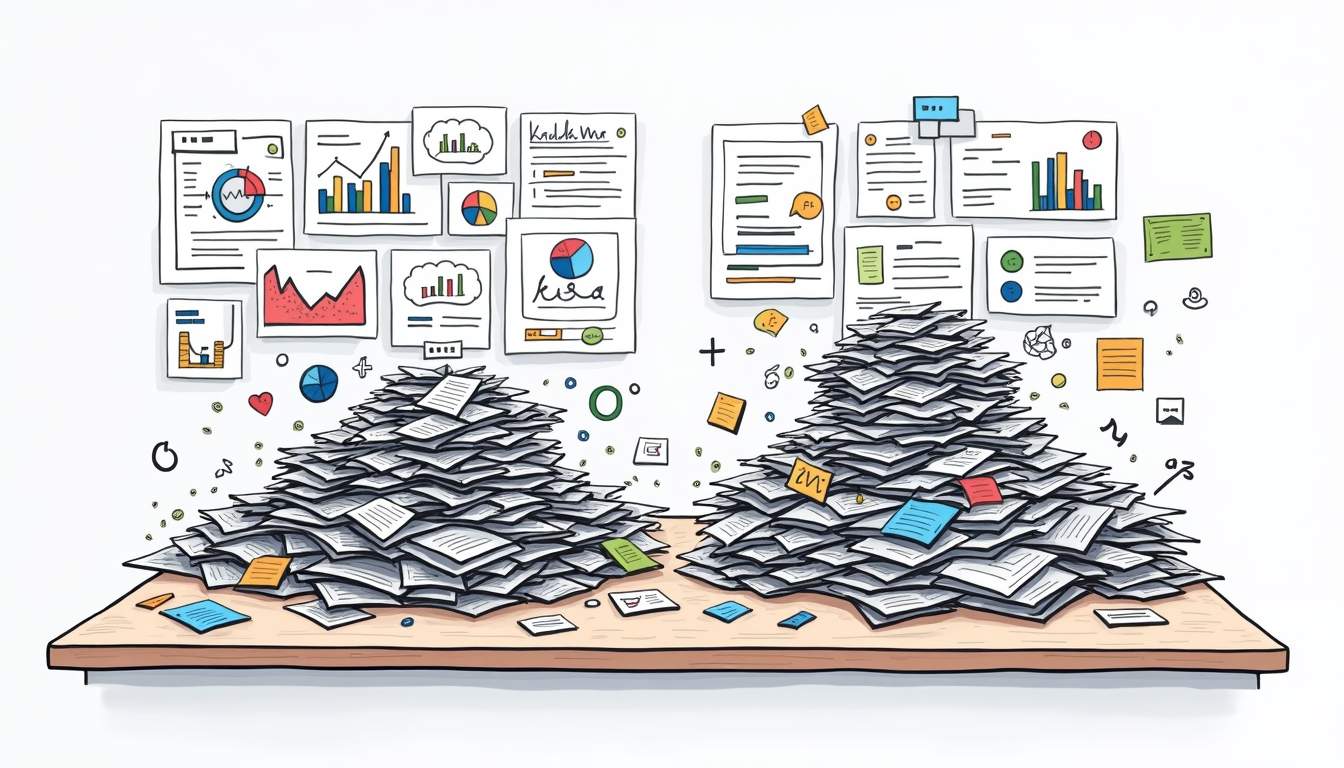
Several patterns tend to show up. High-level roadmaps talk in terms of “phases” and “waves,” but rarely map down to specific domains, repositories, or interfaces. Risk is described generically (“mission critical,” “high complexity”), not grounded in how data flows across systems or which modules are true bottlenecks. And the people who understand the surviving legacy code best are often not the ones in the room when those decks are created. The result is a strategy that looks compelling on a slide but is impossible to execute without rewriting it in the language of code, tests, and deployments.
The Modernization Traps That Keep Teams Stuck
Even when organizations move beyond slideware, certain traps keep recurring. One of the largest is the “all-at-once” mindset. Big-bang rewrites promise a clean break: retire the old system in one heroic cutover and start fresh. In reality, this often delivers delayed timelines, ballooning scope, and parallel systems that both need to be maintained. A safer approach decomposes the problem into capabilities and interfaces that can move independently, reducing the blast radius of any single change.
Another trap is underestimating how deeply legacy systems shape daily operations. Research into B2B organizations found that when more than half of them run on outdated, inefficient systems, the result is a “perfect storm of operational drag and missed growth opportunities” driven by legacy infrastructure and process debt. These systems encode pricing rules, exception flows, regulatory constraints, and years of workarounds. Treating modernization as a pure “technical upgrade” ignores the process and policy rewiring required to make new systems truly effective.
There is also the trap of assuming that legacy risk is mostly about uptime. Security research has highlighted how aging codebases with tangled dependencies and unclear intent introduce subtle, high-impact vulnerabilities that are difficult to detect and fix because original design assumptions are no longer visible. Modernization that focuses only on front-end user experience or infrastructure hosting while leaving the core logic intact often leaves this deeper risk untouched.
What Actually Works: A Practical Legacy Modernization Playbook
Effective modernization does not start with tools or platforms. It starts with clarity about business capabilities. Instead of treating a monolithic application as one indivisible thing, break it into outcomes: quoting, billing, claims adjudication, inventory allocation, campaign orchestration. For each capability, define what “good” looks like in terms of speed, reliability, compliance, and customer experience. Only then does it make sense to ask which parts of the existing system should be retired, wrapped, rewritten, or replaced.
From there, the next step is to make the invisible visible. Static code analysis, runtime tracing, and dependency mapping turn folklore (“that module is scary”) into measurable structure: which services are tightly coupled, where data is duplicated, which interfaces are brittle. AI-driven modernization tools can amplify this step by highlighting complexity hotspots and suggesting safer boundaries, with research showing potential reductions of around 35% in code complexity and 33% in coupling through AI-assisted refactoring when applied to legacy codebases. That does not eliminate the need for human judgment, but it dramatically shortens the path from “this is a mess” to “these are the next three seams to cut.”
Choosing the Right Approach for Each Piece
Once the map is clear, the approach can vary by module rather than being dictated by a single top-down mandate. Some functionality is stable, well-understood, and low change; it may be cheaper and safer to encapsulate it behind APIs and leave the core logic largely intact. Other areas, especially those with heavy business-rule churn or performance issues, may deserve a rewrite into modern languages and architectures. Still others might be candidates for replacement with SaaS products or specialized platforms. The key is that each decision is made with a clear view of dependencies, risk, and business value, not a blanket “migrate everything” directive.
Critically, this playbook treats modernization as an ongoing product, not a one-off project. That means establishing feedback loops from operations, security, and business users back into the modernization backlog. It also means building automated tests, observability, and deployment pipelines as first-class outcomes, so every subsequent change is cheaper and safer than the last.
How Low-Code and AI Change the Legacy Game (When Used Correctly)
Low-code platforms and AI-assisted development are often pitched as silver bullets for legacy problems. They are not. They are accelerators, and like any accelerator, they magnify both good and bad practices. On the positive side, many C-suite leaders now see low-code as a central part of their future technology strategy, with research indicating that about 75% regard low-code as the only viable option for coding in the future when thinking about scale and speed. Used well, low-code can be an excellent fit for workflow orchestration, internal tools, and integration layers that sit on top of modernized core services.
AI tools, meanwhile, can read and summarize large legacy codebases, generate tests, and propose refactorings at a scale that would be unrealistic for manual-only efforts. Combined with human expertise, they help teams untangle heavily coupled modules, document forgotten behavior, and reduce the risk of “breaking something weird” during a change. The caveat is that both low-code and AI need guardrails: clear architecture principles, code review processes, and strong governance to prevent a new generation of hard-to-maintain “shadow legacy” systems.
Avoiding a New Wave of Shadow IT
The temptation with low-code and AI-generated components is to let every team solve its own local problems quickly. That speed is valuable, but without shared patterns, standards, and oversight, organizations can end up trading one form of legacy sprawl for another. A healthier pattern is to define a small set of approved building blocks, integration methods, and data contracts, then encourage teams to move fast within those boundaries. This way, modernization accelerates without fragmenting the landscape all over again.
What We Do Instead: Fix, Prove, Then Scale
If a slide deck can’t fix legacy code, what actually moves the needle? Real modernization requires replacing abstract advice with immediate engineering solutions. This is the core principle behind Control: we don't start with a long discovery phase or a theoretical roadmap; we start by attacking the specific engineering problem that has stalled your initiative.
1. Unstick the Blocker (The "Prove It" Phase)Instead of outputting a thick report, we deploy a small, AI-native team to solve the specific technical debt or complex challenge blocking your progress. This is a fixed-scope intervention designed to prove value immediately—whether that’s modernizing a critical slice of functionality or untangling a specific data knot.
2. Build Reusable Foundations As we fix the immediate blocker, we simultaneously establish the patterns, templates, and guardrails needed for the future. We might introduce low-code platforms here—not as a side experiment, but as a way to orchestrate workflows around your newly modernized APIs, speeding up future development.
3. From Fix to PartnershipOnce the critical blocker is cleared and trust is established, we shift from "emergency repair" to a sustainable partnership. We transition to a model where our engineers work side-by-side with yours to continue the modernization journey, using the momentum from that first win to drive continuous change.
That is why a 50-page deck rarely fixes legacy code: it ignores the reality of the blockage. You don't need a map of the traffic jam; you need a tow truck to clear the wreck. By prioritizing "action over advice" and using agile, AI-empowered teams, we turn a stalled project into an organization that can change its core systems at the speed the market demands.