Heimdall now watches over the Bifrost and your journey to knowledge
Multi-modal approach through RAG
In this Wednesday Wisdom, Adityaraj Sanjay Belhe explores Multi-Modal RAG, which extends Retrieval-Augmented Generation beyond text to include images, audio, and video. The talk covers the architecture, tools, and strategies for building intelligent systems that leverage diverse data types for richer, more accurate responses.
Figma MCP With React Native
In this Wednesday Wisdom, Adarsh Khandelwal talks about integrating Figma's Model Context Protocol (MCP) with React Native. He demonstrates how this bridge fetches design tokens and styles directly from Figma, enabling real-time, consistent UI generation and closing the gap between design and development.
Vector databases
In this Wednesday Wisdom, Rohan Keskar introduces vector databases, explaining their role in managing high-dimensional data. The talk covers how they work, why they are essential for AI applications like semantic search and RAG, and provides real-world use cases.
Eventual Consistency using Transactional Outbox Pattern
In this Wednesday Wisdom, Sagar Tomar talks about achieving data consistency in microservices with the Transactional Outbox pattern. He explores solutions to the dual-write problem, comparing naive approaches to the robust outbox method and its CDC-based improvements.

Automate Mobile Dev & E2E Testing with Mobile MCP Server
In this Wednesday Wisdom, Rushabh More talks about using a Mobile MCP Server to connect AI agents directly to Android and iOS devices. He demonstrates how this protocol enables AI to automate mobile development tasks and end-to-end testing by interacting with native apps.
Model Context Protocol: Standardizing AI Tooling
In this Wednesday Wisdom, Rajat Dangat talks about the Model Context Protocol (MCP), a new standard for AI tool integration. He explains how MCP acts as a universal connector, allowing AI applications to seamlessly interact with various data sources, tools, and services.
Cursor 101
In this Wednesday Wisdom, Shamoil Attaar introduces Cursor, an AI-powered code editor. The brief talk covers its core benefits, setup, and how to optimize its use for more efficient development workflows directly within your IDE.
Apache Spark: Powering Big Data Analytics
In this Wednesday Wisdom, Vighnesh Chavan & Paras Raba talk about Apache Spark, a unified engine for large-scale data processing. The session covers its core abstractions (RDDs, DataFrames), in-memory performance benefits, and its use cases for ETL, machine learning, and real-time analytics.
Building Intelligent AI Agent Teams using CrewAI
In this Wednesday Wisdom, Akshay Iyer talks about CrewAI, a framework for building multi-agent AI systems. He explains how to create role-based agents, orchestrate collaborative workflows, and integrate tools to solve complex, real-world problems efficiently and at scale.

AI + Webflow
In this Wednesday Wisdom, Amit talks about combining AI with Webflow to design and ship sites faster—covering AI-assisted layouts, content workflows, automations, and guardrails for quality, accessibility, and performance across real-world marketing and product websites.

Xcode Instruments
In this Wednesday Wisdom session, Nazima Petant dives into Xcode Instruments—a powerful tool for optimizing iOS app performance. The talk covers how to use Time Profiler to identify CPU bottlenecks, detect memory leaks with Allocations, and implement solutions like background threading and caching to enhance app efficiency.
Write Efficient Unit Tests in Go
In this Wednesday Wisdom, Rushabh More explains how to write efficient unit tests in Go using interfaces and higher-order functions. He demonstrates how to mock dependencies, improve test reliability, and avoid common pitfalls in testable Go code.

What is React Concurrent Mode: A Walkthrough
This Wednesday Wisdom talk goes into the world of React Concurrent Mode. Dive deep into its cutting-edge features, understand the tangible benefits it brings to your applications, and gain insights into its versatile real-world use cases. Elevate your React projects to new heights by harnessing the power of concurrency, optimizing performance, and enhancing user experiences. Join us on this comprehensive exploration of React's v18 breakthrough.

What is Temporal: Workflow & Cluster
This Wednesday Wisdom goes deep into the world of Temporal Workflow Execution. Learn about Temporal, Workflow, Coffee Maker Workflow, and the Temporal Cluster. Discover how Temporal can make your processes more scalable, reliable, and efficient. Understand why Temporal is the go-to solution for reentrant processes and the inner workings of Temporal Server, Elasticsearch, and the database that power this innovative technology.
What is GraphQL: Best Practices
This Wednesday Wisdom talk is all about GraphQL. Learn essential GraphQL best practices to enhance efficiency, security, and scalability. Explore the importance of schema design, error handling, caching, and more in this comprehensive guide.
Welcome to the Modern CSS updates presentation
In this Wednesday Wisdom, Vishnu Prasad talks about modern CSS updates with a focus on Cascade Layers. He explains specificity, the cascade algorithm, @layer usage, and how layers help manage style conflicts and organize CSS for scalable, maintainable design systems.
What is ARKit
In this Wednesday Wisdom, Prathamesh Tatar explores ARKit, Apple's framework for Augmented Reality (AR). The talk covers AR basics, ARKit’s core features, and step-by-step guidance on building AR projects—from placing virtual objects and text to handling gestures and debugging—using Xcode and iPhone.
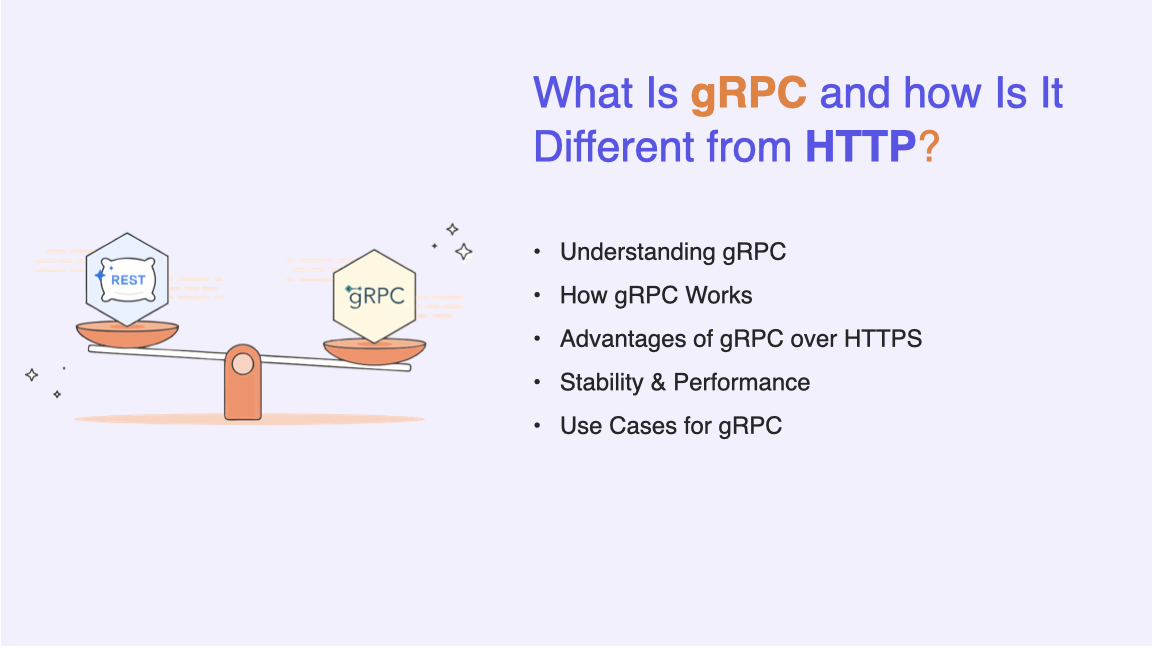
What Is gRPC and how Is It Different from HTTP?
In this Wednesday Wisdom, Tushar Bansal explains what gRPC is and how it differs from HTTP. They break down its performance benefits, use of Protocol Buffers, and why it's ideal for microservices, mobile apps, real-time systems, and edge computing.
Use Vector Embeddings in Conversational AI
This Wednesday Wisdom talk helps you explore the power of vector embeddings in conversational AI. Understand why embeddings are crucial, their role in enhancing AI communication, and the challenges they pose. Discover techniques like Word2Vec, GloVe, FastText, BERT, and Transformers.
Waku protocol for decentralised messaging
In this Wednesday Wisdom, Rohan Keskar talks about the Waku protocol for decentralized messaging. He explains how it ensures secure, censorship-resistant communication over Ethereum, its improvements over Whisper, and showcases an example chat application using Waku.
TypeScript Decorators
In this Wednesday Wisdom, Sourav Singh Rawat explains the fundamentals of TypeScript decorators—what they are, how to use them, and why they matter. He highlights their role in enhancing object-oriented design, abstraction, and code reusability.
TypeScript Realm
In this Wednesday Wisdom, Aseer KT talks about TypeScript fundamentals—covering type inference, annotations, modifiers, and the difference between interfaces and type aliases. He also introduces generics for building reusable, type-safe components in large-scale applications.
Understanding Server Sent Events
In this Wednesday Wisdom, Akshay Iyer talks about Server-Sent Events (SSE) for real-time web communication. The session covers how SSE works, its key features, differences from WebSockets, security considerations, and practical use cases like live feeds and notifications.
Time Management
In this Wednesday Wisdom, Dikhyant Krishna Dalai talks about effective Time Management for developers, addressing key challenges like context switching and approval bottlenecks. The session offers practical solutions—time blocking, decentralized decision-making, and automation—to boost productivity, code quality, and job satisfaction.
State management in SwiftUI
In this talk, Sandesh Naik discusses state management in SwiftUI, covering @State, @Binding, @ObservedObject, @StateObject, and @EnvironmentObject. They explain how these tools help manage view state and data flow in SwiftUI applications.
Testing Modern Web Apps with Playwright
In this Wednesday Wisdom, Mohit Kushwaha talks about testing modern web apps using Playwright. He covers its features like cross-browser support, selectors, assertions, device emulation, parallel testing, and showcases an end-to-end test using the Codegen feature for Pawlyclinic.
The Working of Chrome Extensions
In this Wednesday Wisdom, Anas Nadeem talks about how Chrome Extensions work. He breaks down their core components—manifest files, content and background scripts, popups—and demonstrates real-world use cases, from AdBlock to Grammarly, while building a mini-extension live.
Temporal with Elastic Container Service
In this Wednesday Wisdom, Bhavesh Pawar walks through deploying Temporal with Amazon ECS using AWS Copilot. They explain how Temporal ensures reliable, durable, and scalable workflows, and demonstrate setup steps for local and production environments.
RxSwift Building Blocks
In this Wednesday Wisdom, Sandesh Naik talks about the building blocks of ReactiveSwift and RxSwift. He explains observables, subjects, relays, operators, and schedulers—highlighting how reactive programming simplifies real-time updates through asynchronous event handling.
Service Workers
In this Wednesday Wisdom, Dipanshu Chaubey talks about Service Workers—background browser scripts essential for building PWAs. He covers their lifecycle, capabilities like offline support and caching, limitations, and how they act as proxies between browser and server.
Reusable Github Workflows
In this Wednesday Wisdom, Rohan Joby talks about reusable GitHub workflows. He explains their benefits—like consistency and DRY configurations—key components such as inputs and secrets, and limitations including private repo access and workflow stacking constraints, supported by real-world YAML examples.

React Query
In this Wednesday Wisdom, Praveen explains React Query—a powerful data-fetching library for React. He covers queries, mutations, and its role alongside Redux, demonstrating how it simplifies managing server state in modern React apps.
Profiling In Golang
In this Wednesday Wisdom, Tushar Bansal dives into Profiling in Golang, demonstrating how to optimize performance using Go's built-in pprof tool. The session covers enabling CPU/memory profiling, analyzing bottlenecks, and comparing profiles to enhance application efficiency and scalability.
React 18
In this Wednesday Wisdom, Rohan Saroha talks about what's new in React 18—covering features like automatic batching, transitions, suspense, and server-side streaming. He also explains new hooks (useTransition, useDeferredValue) and how to upgrade from React 17.
Prompt Injection in LLM Apps
In this Wednesday Wisdom, Mithilesh Pandit talks about prompt injection in LLM-based apps. He explains how attackers manipulate prompts to bypass instructions or extract sensitive data, shares real-world examples, and outlines mitigation strategies like input validation and role separation.
Project Management
In this Wednesday Wisdom, Abhidhnya talks about Project Management fundamentals, covering Agile/Scrum methodologies, key PM pillars (planning, communication, risk management), and the "Wednesday Way" culture. The session offers practical tips for team collaboration and emphasizes proactive communication for project success.

Post-Quantum Cryptography
In this Wednesday Wisdom, Rituraj Ingale explores Post-Quantum Cryptography, examining how quantum computers threaten current encryption (like RSA) and the urgent need for quantum-resistant solutions. The talk covers Shor’s algorithm, the "Harvest Now, Decrypt Later" threat, and actionable steps to prepare for the quantum era.
OTA with CodePush on React Native
In this Wednesday Wisdom, Anurag Rathod talks about implementing OTA updates in React Native apps using CodePush. He explains the integration process, how updates are delivered to users, and how App Center helps monitor and manage releases efficiently.
Micro Frontends with Module Federation
In this Wednesday Wisdom, Praveen talks about Micro Frontends and how Webpack Module Federation enables teams to build independent, scalable UI fragments. He explains the benefits, configuration steps, challenges like versioning, and when adopting this architecture makes sense.
Migrating from ECS-EKS
In this Wednesday Wisdom, Bhavesh Pawar talks about migrating from ECS to EKS. He explains when it's ideal to move, prerequisites, architecture differences, and what their migration script automates—like cluster setup, IAM roles, and Helm-based deployment.

Master iOS Performance Optimization with Instruments
This Wednesday Wisdom talk goes into the details of iOS App Performance Optimization with Xcode Instruments. Uncover the secrets to faster, more efficient apps by troubleshooting CPU usage and memory issues. This guide simplifies the process, making it accessible to all. Discover how to utilize Instruments effectively and prevent memory leaks, with practical insights and tips. Elevate your app's performance effortlessly and ensure your mobile applications run at their best.

Memory Management in Go: Stack, Heap & Garbage Collector
This Wednesday Wisdom talk goes deep into Memory Management in Go. Discover how Go's automatic memory allocation, stack, heap, and garbage collection work together. Learn strategies to optimize memory usage, reduce garbage, and restructure structs for efficiency along with Go's unique memory model, emphasizing stack allocation for performance. Join us to enhance your understanding of memory management in Go and improve your coding skills.

NodeJS Testing Best Practices
In this Wednesday Wisdom, Tousif Islam talks about NodeJS testing best practices. The session covers structuring test names (scenario, condition, outcome), realistic input data, property-based testing, and requirement-level test categorization to improve bug detection and code reliability.
Making your code better
In this Wednesday Wisdom, Abhishek Mishra shares practical tips for writing clean, readable JavaScript code. He emphasizes the importance of good naming conventions, minimizing redundancy with the DRY principle, and improving maintainability through clarity.
Kotlin Flows
In this Wednesday Wisdom, Kushagra Madaan talks about Kotlin Flows—how they work, their types (StateFlow, SharedFlow), and how they compare to LiveData and RxJava. He also covers flow operators, collection, and composition for managing reactive data streams.
Javascript Operators
In this Wednesday Wisdom, Vipin Chandra explores JavaScript operators, covering unary/binary operations, type coercion, operator precedence, and practical examples. The talk highlights key concepts like string concatenation with '+', assignment operators, and the difference between prefix/postfix increment/decrement operations.
How Flutter Works
In this Wednesday Wisdom, Shounak Mulay demystifies Flutter by explaining Widgets, Elements, and RenderObjects. They cover how widgets configure the UI tree, how elements manage state and build context, and how render objects handle layout and painting efficiently.
Javascript runtimes : Comparing Node, Bun & Deno
In this Wednesday Wisdom, Kush Pathak compares JavaScript runtimes—Node.js, Deno, and Bun. He discusses their features, performance, security, ecosystem maturity, and ideal use cases, highlighting why Bun is emerging as a high-speed alternative for modern JS apps.

Just YAML Things
In this Wednesday Wisdom, Abhishek Mishra talks about YAML (YAML Ain't Markup Language), exploring its use as a human-readable data serialization format. The session covers YAML basics (key-value pairs, arrays), comparisons with JSON, variable referencing, and real-world applications in configuration and infrastructure provisioning.
Javascript Behind the Scene
In this Wednesday Wisdom, Deepak Singh breaks down what happens behind the scenes when JavaScript code runs. He explains execution context, memory creation, code execution, the call stack, and hoisting in a clear and structured manner.
Introduction to Qwik
In this Wednesday Wisdom, Anurag Rathod introduces Qwik, a new web framework. He discusses problems with current JS frameworks, how Qwik enables instant loading without hydration, and its lazy-loading capabilities for optimal performance.
Introduction to Astro
In this Wednesday Wisdom, Kush Pathak talks about Astro—a modern, zero-JavaScript web framework. He explains its core architecture, how it compares to Next.js, and how Astro uses islands, layouts, and components for building high-performance static and dynamic websites.

Interfaces in Golang
In this Wednesday Wisdom, Poojesh Shetty talks about Interfaces in Go — covering their purpose, how they're implicitly implemented, and the role of empty interfaces. The session includes examples and a demonstration of mocking implementations using interfaces for flexible, testable code.
Getting started with Vim
In this Wednesday Wisdom, Rameez Khan talks about getting started with Vim, the powerful yet challenging text editor. He covers Vim’s modes (Command, Insert, Visual), basic navigation, editing commands, and file operations, while encouraging hands-on practice with tools like vimtutor and Vim Adventures.
Express Routing
In this Wednesday Wisdom, Vipin Chandra talks about Express.js routing fundamentals. The session covers routes, request and response objects, HTTP methods, parameters, route chaining, and modular routing—offering practical syntax examples and quizzes for hands-on learning.
Error Handling in Express
In this Wednesday Wisdom, Vipin Chandra talks about error handling in Express, covering the need for structured error management, differences between operational and programming errors, and how to implement custom middleware for better user experience and system stability.
Find Potential Bugs in Your Service with Diffy
This Wednesday Wisdom session delves into the power of Diffy, a cutting-edge tool for proactive debugging and regression detection in your services. Learn how Diffy acts as a dynamic proxy, multicasting requests to instances running your new and legacy code, thereby identifying discrepancies and potential bugs. The talk covers everything from the underlying mechanics to hands-on setup, offering insights into command-line configurations and CI/CD integration. Equip yourself with the skills to implement Diffy seamlessly, ensuring high code quality and a streamlined debugging process across your development teams.
Distributed Locks Using Redis
In this Wednesday Wisdom, Rajat Dangat talks about distributed locks using Redis. He explains why we need locks, different types (optimistic/pessimistic), and how to implement a pessimistic lock with Redis for mutual exclusion.
Features of ECMAScript 2022
In this Wednesday Wisdom session, Rohan Saroha explores key ES2022 features, including the .at() method for arrays/strings, Object.hasOwn() for safer property checks, private class fields (using # syntax), and top-level await for cleaner asynchronous module code—modern JavaScript enhancements for cleaner, more robust development.

E2E Excellence: Navigating Testing Horizons for Quality Assurance
In this Wednesday Wisdom, Tushar Bansal dives into the world of end-to-end (E2E) testing, highlighting its importance in quality assurance. They cover its benefits, challenges, best practices, and how E2E testing ensures a seamless user experience through full-system validation.
Create Basic 3D Scenes Using Three.js
This Wednesday Wisdom talk goes into the world of Three.js and the power of creating stunning 3D web scenes effortlessly. Learn what Three.js is, explore essential 3D tools like Maya, 3DS MAX, Blender etc. and follow step-by-step instructions to build your own 3D scenes. We demystify the complexities of 3D rendering and provide valuable optimization tips, ensuring your web projects stand out. Dive in now for a deep understanding of Three.js and take your web design skills to new heights!
Dependency Injection with Koin
In this talk, Manav Joshi talks about Dependency Injection (DI) with Koin in Kotlin. He explains the drawbacks of tight coupling using a Car-Engine example and demonstrates how Koin simplifies DI—reducing boilerplate, enabling testing, and supporting ViewModel integration.

Design Patterns
In this Wednesday Wisdom, Rushabh Sancheti talks about key software design patterns—Singleton, Proxy, and Factory. He explains their purpose, how they help manage object creation and access, and their importance in writing scalable, maintainable code.
DB Fundamentals
In this Wednesday Wisdom, Rushabh Sancheti talks about database fundamentals, covering transactions, ACID properties, and read phenomena. He explains isolation levels and how they prevent issues like dirty reads, phantom reads, and lost updates.
Custom Styles Using Tailwind CSS
In this Wednesday Wisdom, Vipin Chandra talks about custom styling with Tailwind CSS. The session covers Tailwind's utility-first approach, theme extension, arbitrary values, raw CSS with @layer, and plugin creation for advanced customization—helping developers tailor styles without leaving the Tailwind ecosystem.
Combine Framework
In this Wednesday Wisdom, Tanvi Shah talks about Apple's Combine framework—a declarative Swift API for handling asynchronous events. She explains core concepts like Publishers, Subscribers, and Operators, and shows how Combine simplifies reactive programming without relying on external libraries like RxSwift.
Clean Architecture in iOS using VIPER
In this Wednesday Wisdom, Neeraj Kumar explains Clean Architecture in iOS using VIPER, breaking down its components (View, Interactor, Presenter, Entity, Router) and their roles. The talk covers implementation strategies, testing approaches, and how VIPER enhances modularity and maintainability in iOS apps.
Build Smarter with LLMs: Fine-Tuning vs RAG for Real-World Apps
In this Wednesday Wisdom, Naeem Dadi explores two powerful approaches to enhance LLMs: Fine-Tuning and RAG (Retrieval-Augmented Generation). The talk compares their strengths—fine-tuning for domain-specific expertise versus RAG for real-time knowledge—and demonstrates how combining both creates robust, accurate AI applications.
Canary Deployments
In this Wednesday Wisdom, Nikhil Ramrakhyani talks about Canary Deployments—a safer release strategy. He explains how it minimizes risk by gradually rolling out updates, highlights its benefits and trade-offs, and walks through the deployment workflow with a demo.
Chrome Extension Tutorial
In this Wednesday Wisdom, Rohan Keskar shares how to create a Chrome extension from scratch. They cover the role of manifest.json, key Chrome APIs like chrome.storage and chrome.tabs, and walk through a practical code example.
Change Streams and Real-Time Data with MongoDB
In this Wednesday Wisdom, Manav Joshi talks about enabling real-time data with MongoDB Change Streams. He explains the drawbacks of polling, how Change Streams work, and how they empower live applications like chat, stock tickers, and e-commerce alerts.
Build and publish React Native App To Test Flight using XcodeBuild
In this Wednesday Wisdom, Poojesh Shetty explains how to build and publish a React Native app to TestFlight using XcodeBuild. The talk covers creating certificates, setting up mobile provisioning profiles, and implementing a GitHub Actions workflow for automated builds, with key references for further learning.
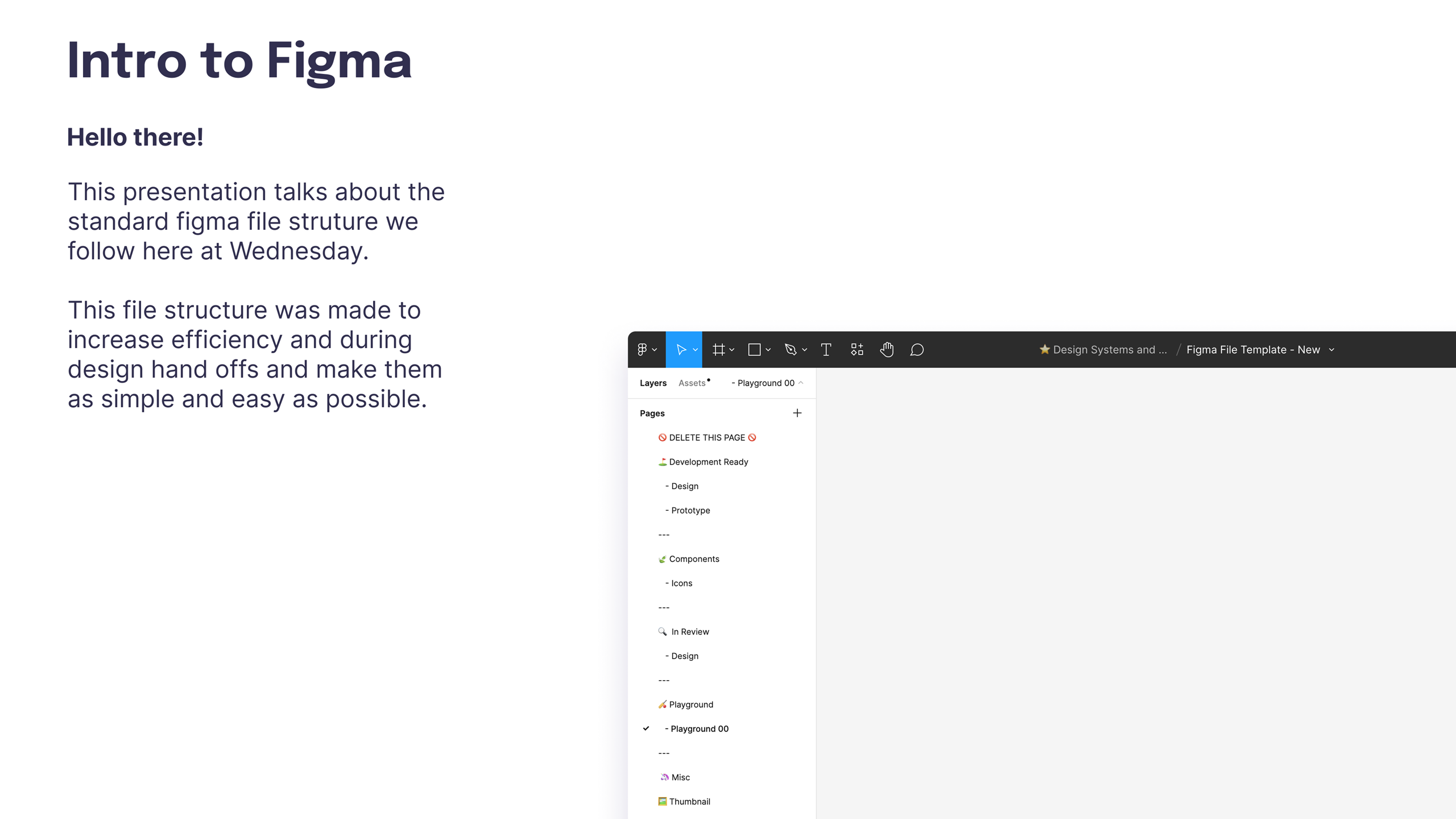
A Guide to Figma File Structure for Developers
This Wednesday Wisdom talk is all about unlocking effective Figma file structuring with our comprehensive guide. Elevate your design-to-development workflow as you explore best practices for organizing layers, components, and pages. Make it effortless for developers to grasp and implement your designs seamlessly.
An overview of performance in React Applications
In this Wednesday Wisdom, Christin Itty John talks about performance in React apps. She covers render scheduling, fibers, optimizing with useCallback and memo, using the React Profiler, and analyzing memory snapshots to identify and reduce unnecessary re-renders.
Best Practices for Asynchronous JavaScript
In this Wednesday Wisdom, Ritwik Bhanot talks about best practices for asynchronous JavaScript. He shares tips on when to schedule vs. await, pitfalls of return await, when to use plain promises over async/await, and how to optimize memory usage.
AWS Chatbot for Maximizing AWS Efficiency
In this Wednesday Wisdom, Vivek Pandey introduces AWS Chatbot – a powerful ChatOps solution that simplifies AWS monitoring and operations via Slack/Chime. The talk covers its real-time notifications, quick setup, permission management, and practical use cases like CloudWatch alarms, demonstrating how it streamlines DevOps workflows compared to traditional methods.
Automate Accessibility Tests with Storybooks
This Wednesday Wisdom talk goes into the details of automating accessibility testing for your component library. This lets you run component-level accessibility audits, choose your own rules, test the accessibility of your components on interaction, and integrate it into your CI/CD to ensure accessibility issues are captured early in the development process and also to make sure that everyone in the team follows required standards.
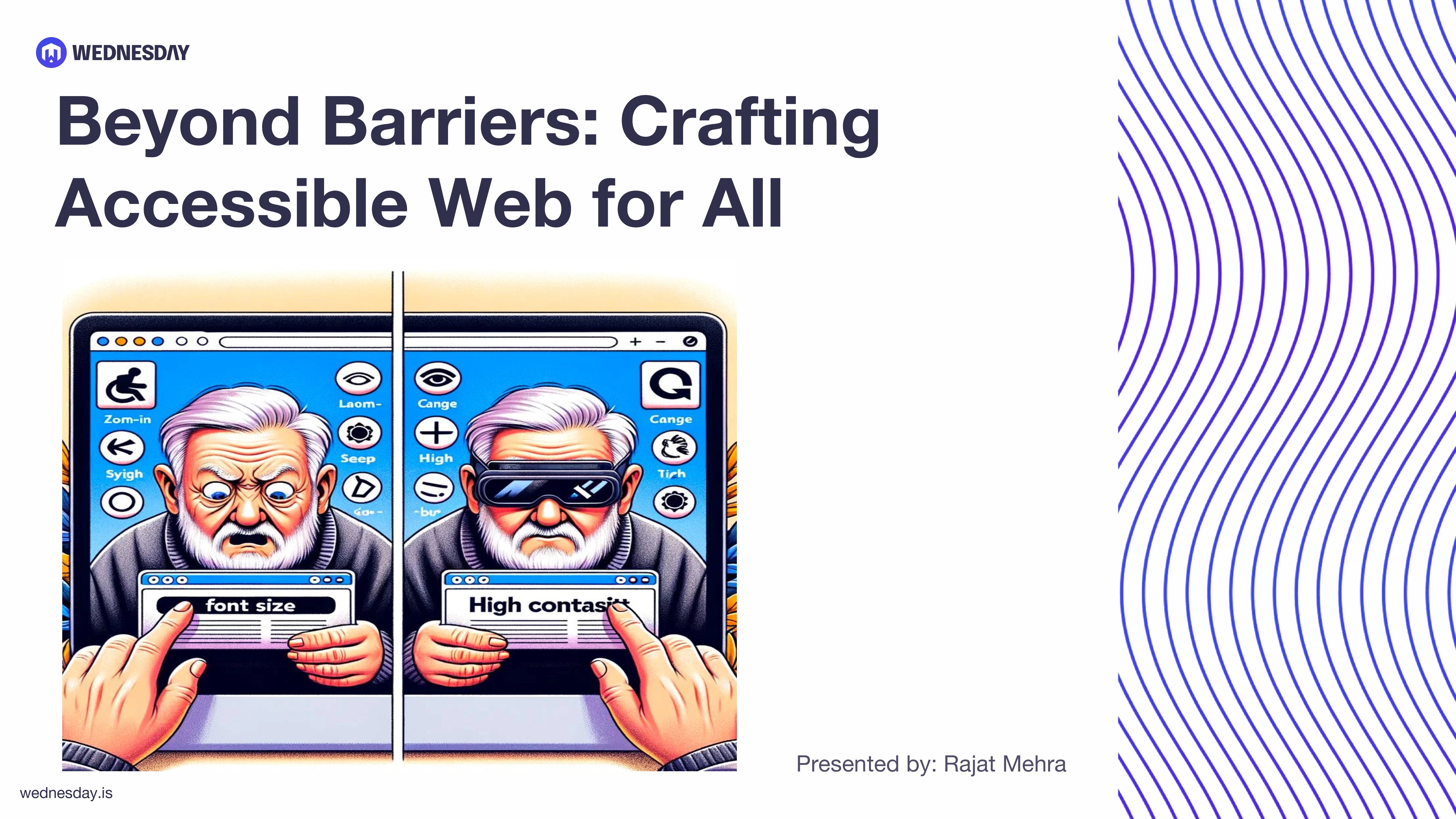
Beyond Barriers: Crafting Accessible Web for All
In this Wednesday Wisdom, Rajat Mehra explores the importance of web accessibility and shares practical strategies to make digital platforms inclusive. He highlights technical practices, legal implications, and the role of accessibility in creating better user experiences for all.